
The Pitt, a medical procedural airing on HBO Max, has been praised by the healthcare community as the most medically accurate hospital show on television, but beyond clinical accuracy, the show is emotionally resonant. It holds up a mirror to the moments most of us aren’t prepared for – the conversations we delay, the documentation we never fill out, and what happens when our wishes collide with a system that defaults to doing everything, whether or not “everything” is what we want. As the Season 2 finale approaches, those questions have never felt more urgent.
About our Guest Author, Elyssa Katz
Elyssa Katz is the Senior Director of Marketing & Communications at the National Alliance for Care at Home, the parent organization of CaringInfo. She is also a certified death doula.
Self-Advocacy at the End of Life
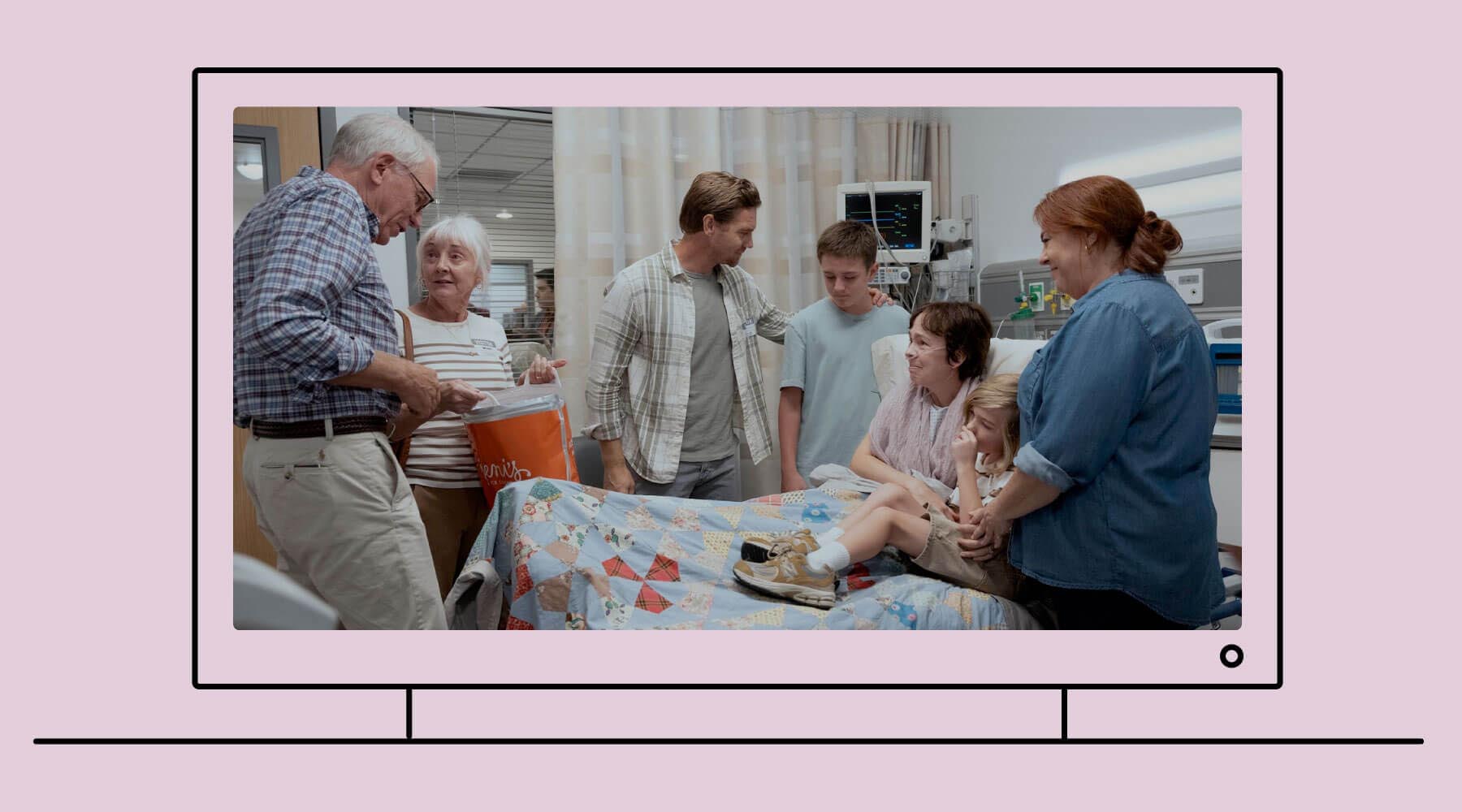
Roxie Hamler arrived at Pittsburgh Trauma Medical Center with terminal lung cancer, a broken leg, and a clear sense of what she wanted: comfort, dignity, and the chance to say goodbye to her children while she was still herself. She had documented her wishes, hired a death doula named Lena to serve as her advocate, and done the hard work most of us avoid entirely.
When Roxie communicates that her pain can no longer be managed through her medications, Dr. Robby (played by actor Noah Wyle) invokes the doctrine of double effect – the principle that a treatment whose primary intent is to relieve suffering is ethically permissible, even if it may secondarily shorten life. He approves an increase in morphine. By episode ten, Roxie has said her goodbyes as Dr. McKay adjusts the pump.
Her death is not a tragedy but rather an example of what dying with dignity can look like.
Countering Misconceptions
Despite the power of Roxie’s storyline, there are elements of The Pitt’s depiction of hospice care that are worth clarifying.
The first is that hospice hastens death. With informed consent, Roxie chooses to pursue a treatment that prioritizes her comfort. In her case, an increased morphine dosage leads to the slowing of her breathing. For many patients receiving hospice care, the right approach to medication and pain management, coupled with psychosocial support, actually extends life.
The second is that death must happen in the hospital. While Roxie discusses returning home with her family, she ends up deciding to remain in the hospital room. It’s important for viewers to understand that this is her personal decision, and that high-quality hospice care can be provided wherever a patient calls home. Regardless of location, hospice care still includes the medication, durable medical equipment, and expert care team that patients have access to in the hospital setting.
Advance Directives and Documentation
Roxie’s story is the emotional centerpiece of season two, but The Pitt has been making this argument since season one.
In episode two of the first season, we meet Mr. Spencer, an elderly man with Alzheimer’s and pneumonia, and a patient who had done everything right. He had an advance directive and had clearly documented that he did not want to be intubated or placed on life support. But it didn’t matter.
His daughter refused to honor the directive and convinced her brother to go along with her, and since both held power of attorney, the medical team was forced to intubate a man who had explicitly said he did not want that. The paperwork existed, but the conversation had never happened.
This is the lesson The Pitt drives home repeatedly: documents are not enough. An advance directive that lives in a filing cabinet and has never been discussed with your family is a wish, not a plan. The conversation — the imperfect, specific, loving conversation about what you want and why — is part of the plan.
During this episode, and again in Season 2, the cast mentions a POLST. A POLST is short for Portable Medical Order and is different from an advance directive. Often used by seriously ill or frail persons, they address a limited number of critical medical decisions. These decisions can include information on Do Not Resuscitate and treatments such as feeding tubes and mechanical ventilation. POLSTs are filled out with a doctor and often are completed when entering hospice or the last year of life. Learn more about POLSTs and how they can be an essential part of advance care planning.
What a Death Doula Actually Does
Many viewers encountered the term “death doula” for the first time through Roxie’s storyline. A death doula is a nonmedical companion who assists a dying person in the final stages of life, providing emotional support, helping families navigate medical logistics, and advocating for the patient’s stated wishes. Lena does exactly this by showing up at the hospital when she knows Roxie needs someone who is there solely for her.
Hospice care is built on the same premise. Individuals facing the end of life deserve a team whose primary commitment is to their comfort and values. Death doulas and hospice professionals are not the same thing, but they share a philosophy, one that other parts of the healthcare system struggle to accommodate.
You Are Your Own Most Important Advocate
The healthcare system is not designed to stop and ask what you want. In a crisis, it is designed to act. For patients with serious illness or anyone who has strong feelings about what a “good death” looks like, the system’s default settings may not match your wishes. The only way to change that is to do the work before you need it.
- Complete an advance directive to record your wishes for medical treatment if you become unable to speak for yourself. CaringInfo offers free, state-specific advance directive forms.
- Talk to your family about what’s in your advance directive, as it’s only as powerful as the people who know it exists, where to find it, and what it says.
- Designate a healthcare proxy you trust to advocate for your wishes if you cannot speak for yourself. Ensure that person knows, in detail, what you would want.
- Know your options for care. Palliative care can begin at diagnosis and focus on quality of life alongside any treatment. Hospice care becomes appropriate when curative treatment is no longer the goal, and the prognosis is six months or less. Neither is giving up
- Consider who your Lena is. Who is the person in your life who will show up and make sure the doctors and nurses hear what you want? If that person doesn’t exist, consider whether a professional advocate, social worker, or end-of-life doula might play that role.
Why Shows Like This Matter
The Pitt is not a public health campaign, but it may be serving as one of the best conversation vehicles available to us right now. We will all face death. How we face it is, more often than we think, up to us.